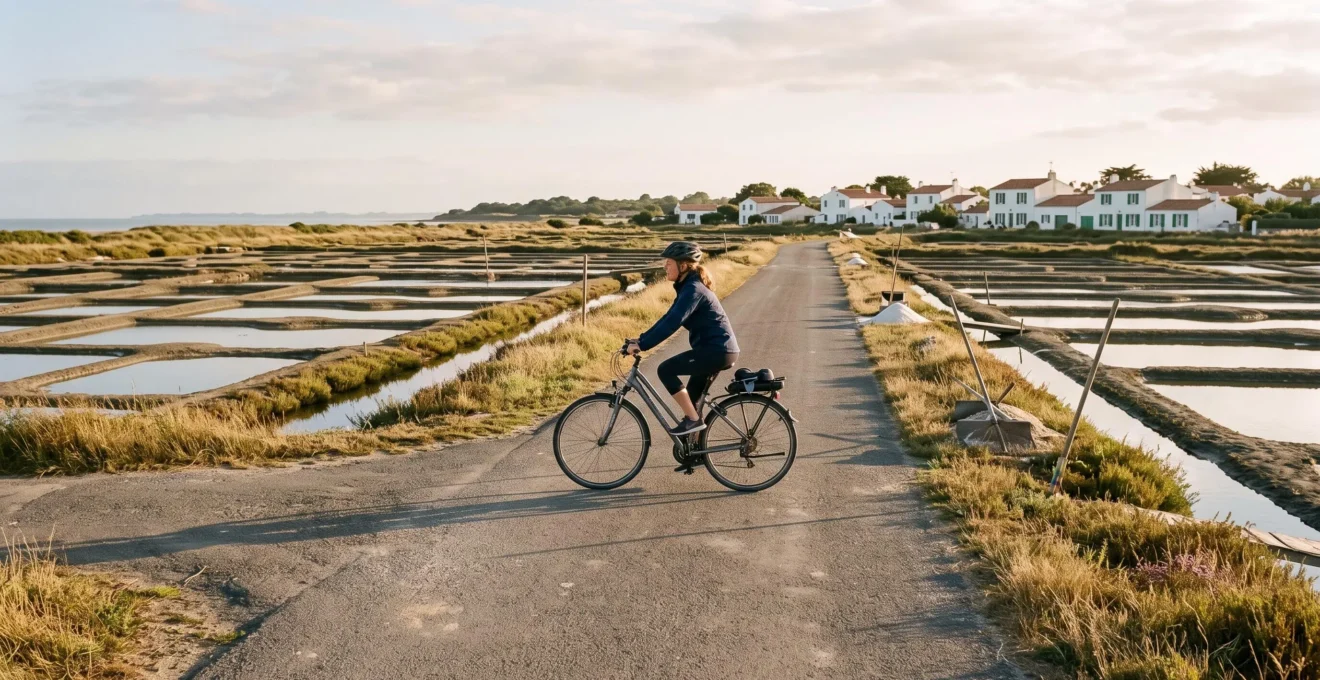
If you want a simple, low-stress way to explore Île de Ré, cycling is one of the best options: you move at your own pace, you stop whenever a view catches your eye, and you can link villages, salt marshes, and beaches without complicated logistics.
Even if you’re not an experienced rider, the island’s overall flat profile makes the idea much less intimidating than it sounds. According to the Office de Tourisme Destination Île de Ré, the highest point is only 19 meters, which helps keep rides approachable for beginners.
Direct answer: Cycling works so well on Île de Ré because the island is largely flat and has a dense network of dedicated bike routes that connect key villages and landscapes—so you can see a lot in a short stay, even without cycling experience.
If you’re hesitating, this is what usually makes the decision easy
- Beginner-friendly terrain: the island is mostly flat (highest point: 19 m, per the local Tourist Office).
- Connected routes: around 138 km of cycling itineraries are managed across the island (Communauté de Communes de l’Île de Ré).
- Practical for short stays: you can combine villages + marshes + beaches in one day by choosing a simple loop.
- Low logistics: renting a bike on the island is often the simplest approach if you didn’t bring equipment.
Why Cycling Is the Ideal Way to Explore Île de Ré
Cycling matches the island’s scale: distances feel manageable, and you don’t need to “commit” to a big day. You can ride for 30 minutes, stop for a port or a beach, then continue—without worrying about parking, one-way streets, or missing the best viewpoints because you drove past too fast.
It’s also one of the easiest ways to turn a limited schedule into a real island experience. In a single day, you can realistically mix different atmospheres—whitewashed villages, open marshland, coastal stretches—because you’re not stuck in traffic and you can hop between areas using cycle routes.
Cas pratique
Imagine you have just one full day on Île de Ré. You pick one “anchor” village to start and finish (so logistics stay simple), then ride a short loop: village lanes in the morning, salt marsh scenery around midday, and a beach stop in the afternoon. The point isn’t mileage—it’s how easily you can stack different landscapes without feeling rushed.
What makes cycling especially reassuring for a beginner is that you can keep things flexible: shorten your route at any time, take breaks, and choose quieter segments. If your goal is “see more, stress less,” a bike often does that better than a car on a small island.
How Do the Island’s Cycling Paths Make Exploration Easier?
Yes—Île de Ré’s bike network is widely presented as beginner-friendly, mainly because of the island’s flat relief and the way routes connect settlements and natural areas. The Office de Tourisme Destination Île de Ré notes both the flat profile (highest point 19 m) and a substantial network of cycle paths.
On the infrastructure side, the politique cyclable de la Communauté de communes explains that the island has around 138 km of cycling itineraries (community and municipal routes) and that the intercommunal body is responsible for creating, developing, and maintaining them. That governance detail matters: it’s not just “paths exist,” it’s a network with ongoing management.
138km
Approximate length of cycling itineraries on Île de Ré (Communauté de Communes de l’Île de Ré; also echoed by the Tourist Office).
For a first-time visitor, the practical benefit is simple: you can plan around connections instead of roads. A typical “easy win” is linking a village center to a beach stretch or marshland viewpoint mostly via cycle routes, then returning along a different branch—without needing advanced navigation skills.
What to watch for when you’re new to the island: “bike paths” can include different types of routes (community vs municipal). Before you leave, quickly check which segments are fully separated from traffic and where you might share space with cars.
If you want a second, journalistic cross-check on the scale of the network and its development, France Bleu reports the network was at 125 km and was planned to be extended (work projected through 2028), with an extension “from 125 to 135 kilometers” quoted from a local elected official.
Practical Tips to Prepare Your Cycling Day on Île de Ré
Planning a cycling day trip on Île de Ré doesn’t need a sporty mindset—think comfort, simple routing, and leaving yourself time to stop. Start by deciding what kind of day you want: “villages and cafés,” “marshes and nature,” or “beach-focused.” That choice does more than any perfect distance estimate.
If you didn’t bring equipment, renting a bike on the island is often the simplest option: it avoids transport hassles and lets you pick a model that fits your plan (upright city bike for comfort, or something a bit more versatile). For up-to-date practical details (availability, conditions, and suggested rides), the official page “The island of Ré by bike: unforgettable rides!” from the Tourist Office is a reliable starting point.
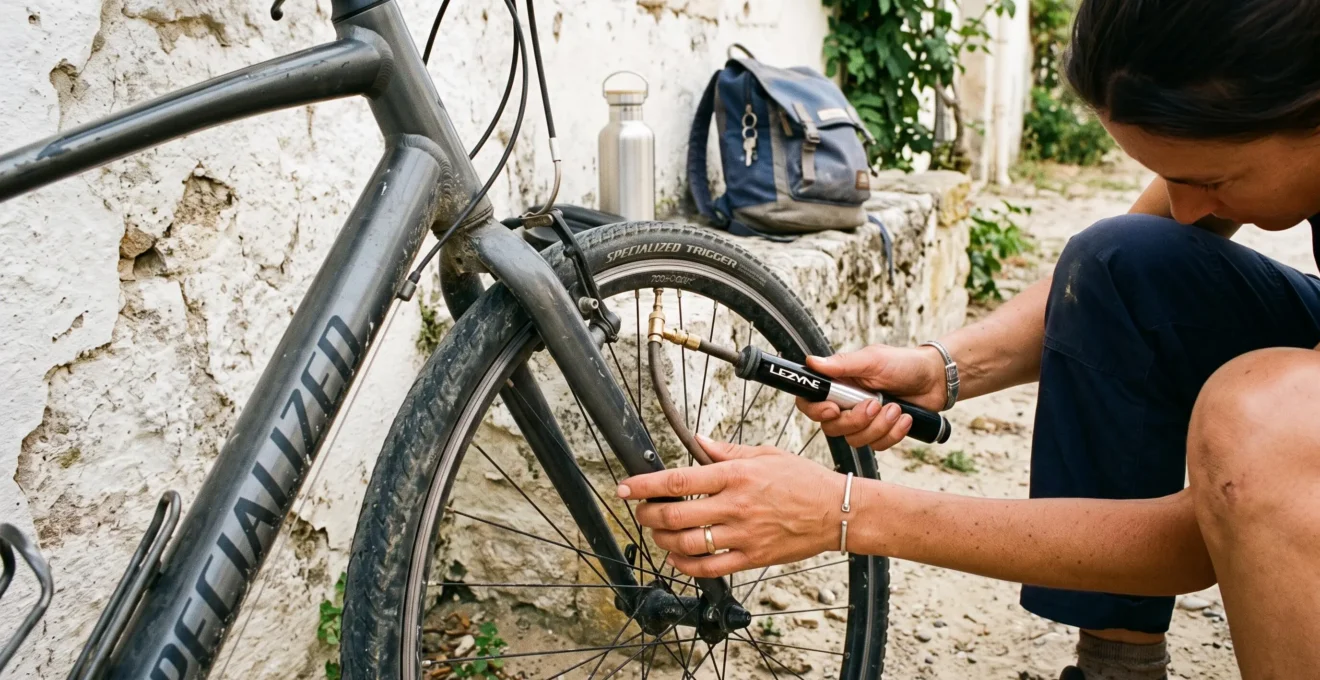
Is cycling on Île de Ré suitable for beginners with no cycling experience?
In most cases, yes—because the island is largely flat (highest point 19 m, according to the Tourist Office), which removes the biggest physical barrier many beginners fear: long climbs. The key condition is to keep your first day simple: choose a short loop, ride at a relaxed pace, and plan extra time for stops.
If you’re truly out of practice, the most effective “hack” is to start early, when paths tend to feel calmer, and to avoid trying to cross the whole island in one go. A comfortable day is the one you can shorten easily.
What should you pack for a day of cycling on Île de Ré?
Pack for comfort and small problems, not performance. You’ll enjoy the island more if you can handle sun, wind, and a quick snack break without searching for a shop at the wrong moment.
- Water (at least one bottle) and a snack you actually like
- Sun protection (sunscreen, sunglasses) and a light layer for wind
- A simple way to navigate (phone with map, or a note of your key stops)
- A small lock if it’s not included with your rental
- Basic comfort items (plasters, tissues, a small power bank if you rely on your phone)
How do I organize a cycling day with limited time?
Make it a “two-anchor” day: pick one main village area you want to enjoy slowly, and one landscape highlight (marshes or beach), then connect them by bike and return without stacking too many extra detours.
- Choose one start/finish point
It keeps your day calm (no transport puzzle at the end) and makes it easy to shorten the ride.
- Pick one “must-see” landscape
Decide between a marsh-focused ride or a beach-focused ride—trying to do everything often makes the day stressful.
- Plan one long stop
Build the day around a real break (lunch, harbor walk, beach time). It’s what makes cycling feel like a holiday, not a workout.
- Check the weather before leaving
On an Atlantic island, wind can change how a distance feels. If it’s windy, keep the loop shorter.
If you also want general, non-technical touring advice that applies anywhere (pacing, comfort, basic safety), these cycling tips can help you avoid common first-day mistakes.
What to Discover by Bike: Highlights of Île de Ré
The easiest way to build confidence is to plan around what you actually want to see. By bike, Île de Ré shines when you mix one village atmosphere (markets, small streets, a harbor) with one open landscape (salt marshes or beach stretches).
Instead of a “checklist of sights,” think in clusters. Villages can be close enough to connect in the same outing, and the transition between them—quiet lanes, marsh edges, long horizon lines—often becomes the most memorable part of the day.
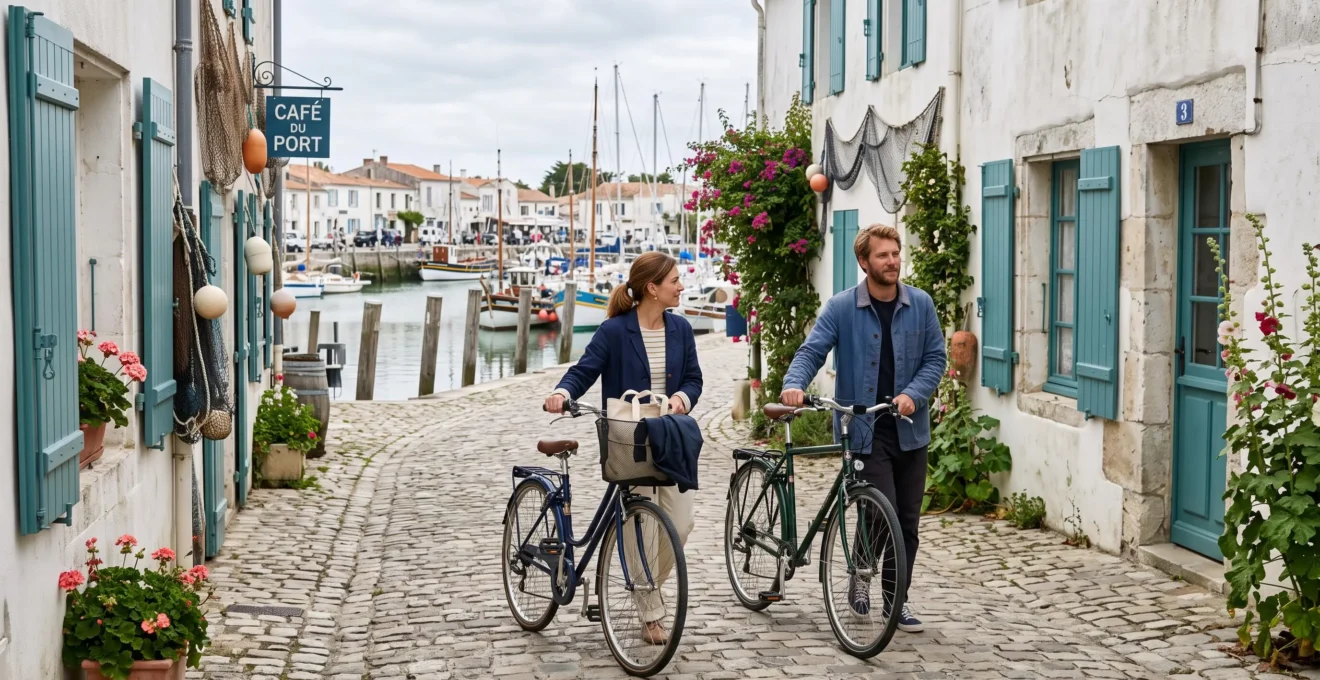
What can be reached by bike: villages, marshes and beaches?
Practically, you can reach the island’s classic mix—villages, salt-marsh scenery, and beaches—by choosing routes that link these environments rather than trying to “tour the whole island.” The Tourist Office presents cycling as a central way to access unforgettable rides across the island’s landscapes, and the intercommunal network described by the Communauté de Communes is designed to connect places rather than isolate them.
A simple pattern that works well is: village streets early (when they’re calmer), marshes late morning (good light, open views), then beach time in the afternoon. If a lane feels tight, walking your bike for a minute is normal—especially around harbors and narrow village streets.
Can you explore Île de Ré by bike during a short stay?
Yes—if you define “explore” as getting a real feel for the island, not ticking off every corner. With one or two well-planned rides, you can experience the signature contrasts: built heritage in villages, wide open marshland, and the coastal edge.
The most helpful mindset for a short stay is to focus on one area per half-day. That way, you keep time for stops, photos, and unplanned detours—often the best part of cycling on Île de Ré.
A quick decision tip : If your schedule is tight, choose one base village and do loop rides from there. You’ll spend less time “getting organized” and more time actually enjoying the island.
Planning Your Trip: Extending Your Active Travels Beyond the Island
If you’re close to deciding, keep it simple: plan one first ride that’s intentionally easy, and leave space for a second ride only if you feel like it. On Île de Ré, the combination of a flat profile and a structured cycle network means you can prioritize comfort and discovery over performance.
If you enjoy this kind of relaxed, active travel—where the journey between places is part of the experience—you’ll probably like other destinations built around walking and nature trips too.
The safest next step is to verify the latest practical details (route suggestions, current works, and local guidance) with official local tourism and public sources before you set off.